Categories
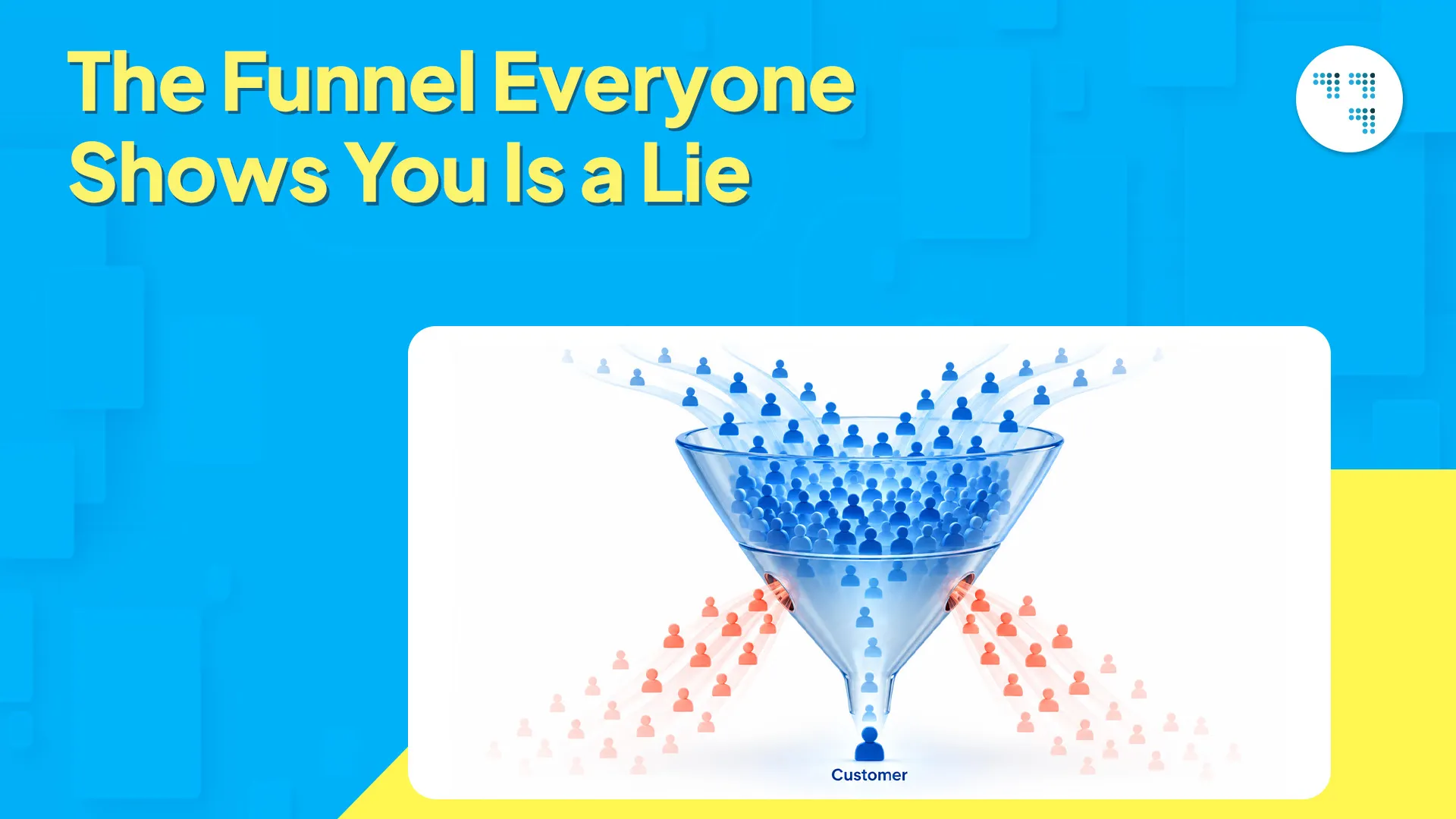
You hit your lead target this quarter. Revenue didn’t move the way it should have. If that sounds familiar, you’re not imagining it, and you’re not alone. Lead generation and revenue growth are tracked like they’re the same number. They aren’t, and the gap between them is where most marketing budgets quietly disappear.
Leads stop short of revenue mainly because of weak nurturing, loose lead-quality standards, slow or inconsistent follow-up, and no shared definition between marketing and sales of what counts as “qualified.” Generating more leads doesn’t fix any of these. Each one has to be addressed on its own, usually in this order: tighten who counts as a lead, then nurture consistently, then speed up follow-up.
The scale of this gap is well documented. MarketingSherpa’s lead nurturing research found that 79% of marketing leads never convert into sales, and traced most of that loss to insufficient follow-up rather than poor product fit. Separately, Salesforce’s State of Sales report puts average B2B lead-to-customer conversion at just 2% to 5% across industries.
Those numbers compound across funnel stages:
Funnel stage | Typical conversion rate | What it means |
Lead to MQL | ~31% average | Roughly two-thirds of raw leads never meet basic qualification criteria |
MQL to SQL | 13-16% average | The steepest drop in most funnels, and the most fixable |
SQL to closed-won | 20-30% typical | Once sales genuinely engages, win rates improve sharply |
Full funnel: lead to customer | 2-5% average | The number that actually maps to revenue |
The MQL-to-SQL stage is where most B2B pipelines leak hardest, and it’s largely a qualification problem, not a sales-effort problem.
A campaign optimised purely for cost-per-lead fills the funnel with people who clicked, not people who fit. Volume targets without fit criteria are one of the most common lead generation mistakes, because they look like success in a dashboard while quietly lowering the conversion rate underneath.
Most buyers aren’t ready to purchase the day they fill out a form. Without a structured lead nurturing content sequence, interest cools before sales ever gets a real shot at the conversation.
If marketing counts a form-fill as qualified and sales wants a budget-and-timeline conversation, every lead handed off will feel wrong to someone. This misalignment alone accounts for a meaningful share of the MQL-to-SQL drop shown above.
Paid traffic makes this worse when it isn’t paired with conversion rate optimization on the landing page itself. We’ve written separately about why Google Ads campaigns stop converting, and the same root causes, weak targeting, mismatched landing pages, no retargeting, show up here too.
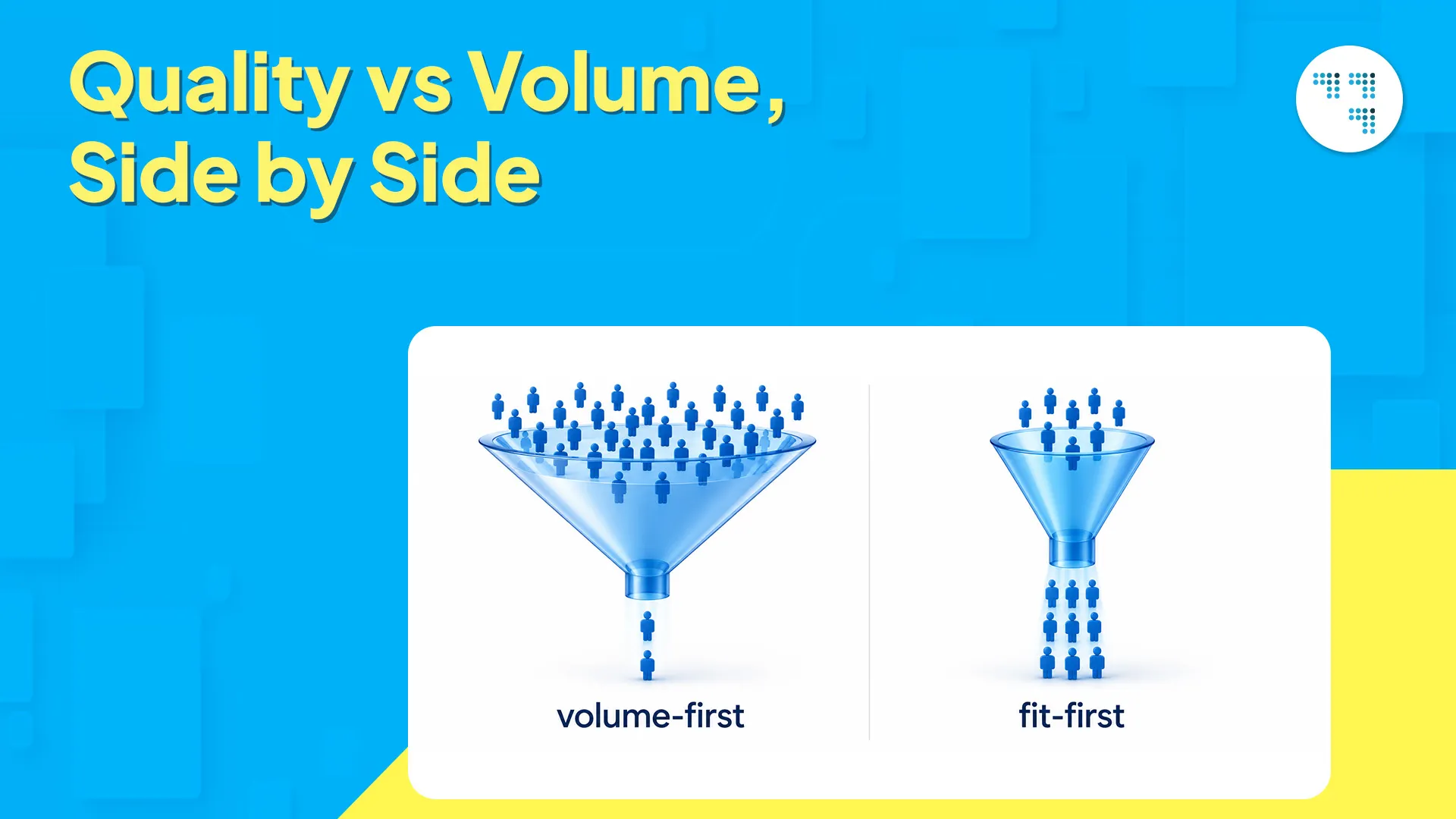
Approach | Typical outcome |
Volume-first (low fit criteria) | More leads in the CRM, lower MQL-to-SQL rate, higher cost per customer |
Quality-first (clear fit + intent criteria) | Fewer leads, meaningfully higher conversion rate, lower cost per customer |
Neither approach is automatically right. The question is whether your current mix matches what your sales team can actually follow up on. A smaller, better-fit pipeline usually outperforms a larger, loosely-qualified one.
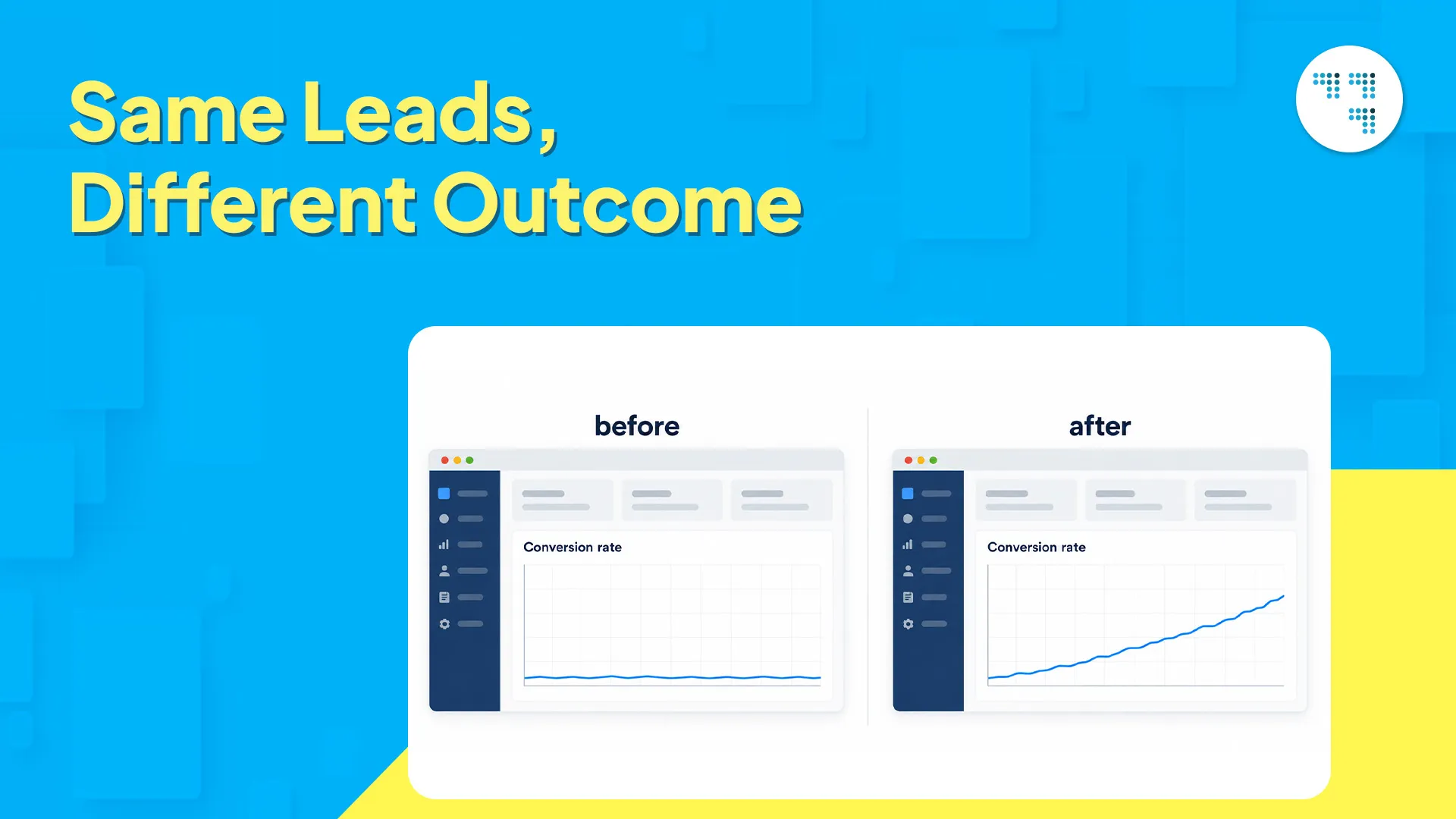
Forrester and Demand Gen Report data shows the median MQL-to-SQL conversion rate has been falling in recent years, even as lead volumes rise. More leads, moving through the same weak qualification process, simply produces more noise.
We’ve worked through this exact gap with clients before. A few examples are in our case studies.

Lead generation strategy and revenue growth aren’t the same project, even though they’re tracked on the same dashboard. The leads that aren’t buying usually aren’t a traffic problem, they’re a qualification, nurturing and follow-up problem. Fix those three, in that order, and the same lead volume you already have will start producing more revenue, without spending a rupee more on paid media to generate additional clicks. If you’d rather have someone map this for you, get in touch and we’ll walk through your funnel together.
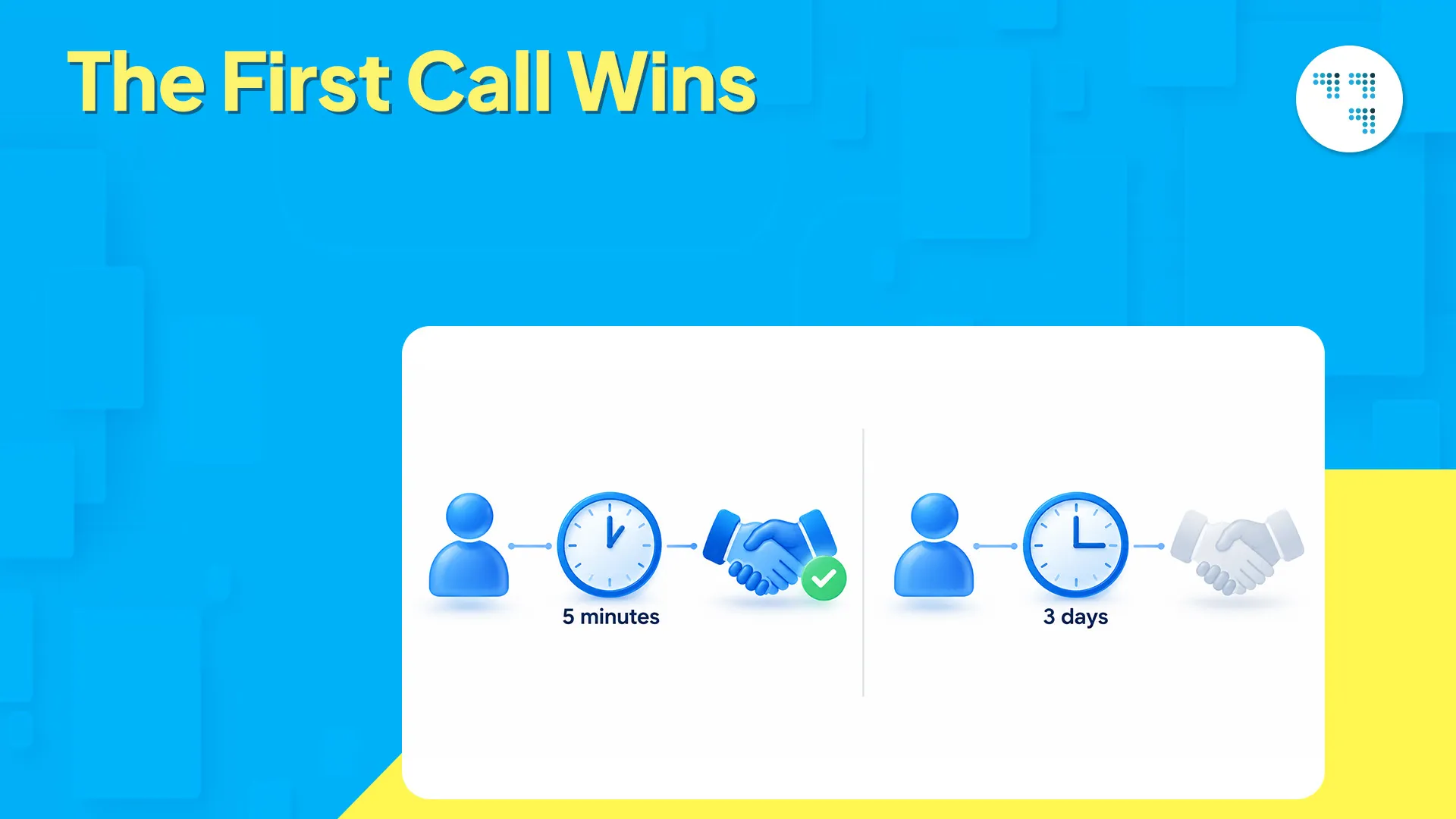
Mostly weak nurturing, inconsistent follow-up and loose qualification criteria. MarketingSherpa’s research found 79% of leads never convert, largely due to insufficient follow-up rather than poor product fit. A lead who waits two days for a call has usually moved on by the time someone responds. At RDS Digital, we look at the full journey from first click to first sales conversation, because the gap is rarely in one place.
Lead generation gets someone into your funnel. Lead nurturing is the structured follow-up that moves them toward a buying decision. Most funnels invest heavily in the first and barely touch the second. RDS Digital treats the two as one connected system, since budget spent on generation is wasted if nothing happens once the lead arrives.
Define fit and intent criteria with sales before a campaign launches, score leads on behaviour rather than a single form-fill, and review conversion rate by source regularly so weak channels get cut, not scaled. Adding a qualifying question like budget or timeline to the form also helps filter out low-intent enquiries. When RDS Digital plans a campaign, we agree on what a good lead looks like with the client’s sales team first.
Across B2B industries, 2% to 5% is typical, per Salesforce’s State of Sales data. Rates above that usually reflect tighter qualification criteria rather than a fundamentally different market. Your own benchmark matters more than an industry average, so track your rate by month and by channel. RDS Digital helps clients set up that tracking.
It fixes the landing page and follow-up experience the lead actually goes through after clicking, so the same traffic produces proportionally more qualified leads instead of just more raw clicks. Small changes like a shorter form, clearer messaging or faster page load can lift results without more ad spend. RDS Digital uses conversion rate optimization alongside paid media and SEO so the traffic we bring in is more likely to become revenue.
RDS Digital is a Bangalore-based digital marketing agency working across SEO, paid media and conversion strategy for B2B and B2C clients.

#80, 1st mainSanthrupthi
Nagar,JP Nagar 7th Phase, Bengaluru-78

© Copyright 2026, All Rights Reserved by RDS Digital
© Copyright 2024, All Rights Reserved by RDS Digital
Want to grow Your Business With Our Digital Marketing Solutions?